Your Eclipse Photo Questions, Answered: How to Capture the 2027 Eclipse in Egypt

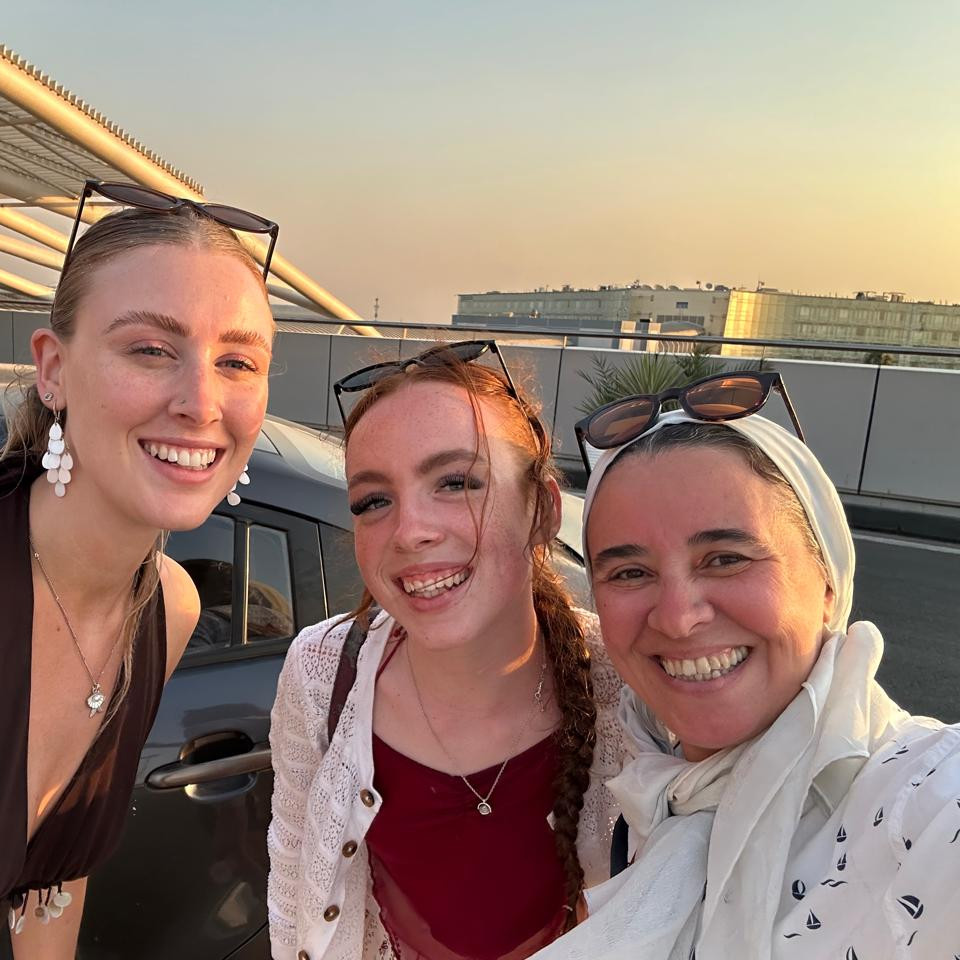
By Moshy, licensed Egyptologist and PhD candidate in Heritage · 3-minute read

It's 1:02 pm on 2 August 2027. You're standing at the foot of an obelisk that has pointed at the sky for 3,500 years. The light turns silver, the crowd falls silent, and the sun disappears. In its place, a glowing crown of light. You lift your phone, and in one frame you capture the sky, ancient Egypt and yourself.
That's the photo I want you to take home. Since I started talking about the eclipse, my guests have been sending me the same questions, so here are my answers.
"Can't I just photograph the eclipse anywhere?"

You can! The eclipse will be visible along a long path, from Spain to Somalia, and NASA and professional astronomers will publish perfect close-ups of the sun that day.
But nobody else can take your picture. A photo of the corona above a temple, in the city where Egyptians worshipped the sun as Amun-Ra, links astronomy, history and geography in one frame. A telescope can't do that. And the most important thing in your photo will be you, standing in a place where the sun was a god.
"Why obelisks and columns?"
Because in Luxor, the sun will be very high, almost overhead, during totality. A wide landscape shot will show you either the temple or the sun, rarely both. Obelisks, giant columns and colossal statues reach up towards the sky, so they can share the frame with the eclipse. And there's a beautiful meaning too: obelisks were sacred to the sun god. They were made to point at exactly this moment.
"Where should I stand in Luxor?"
My favourite frames:
Hatshepsut's obelisk at Karnak: the tallest obelisk still standing in Egypt, pointing straight at the sky.
The Great Hypostyle Hall, Karnak: 134 giant columns. Shoot upwards between them to frame the corona in stone.
Luxor Temple: its obelisk and the colossal statues of Ramesses II at the gate.
The Colossi of Memnon: two seated giants on the West Bank, made for dramatic upward angles.
The horizon: during totality, the whole horizon glows orange like a sunset on every side. Turn around for a wide shot of the temples in an eerie twilight.
"How do I take the silhouette shot?"

This is the picture I'd love every guest to take home. During totality, the corona glows against a dark sky while everything on the ground becomes a black outline.
Expose for the sky. On your phone, tap the corona and slide the brightness down until the sky looks deep and rich.
Get low. The sun is high, so your photographer should crouch or even lie on the ground, pointing up, with you between the camera and the sky.
Pose with a story. Arms raised to the sun, a hand "holding" the corona, or two people reaching for it together.
Add a monument. Stand beside an obelisk or column, and your silhouette and ancient Egypt's appear side by side.
"Any other tips?"
Use your phone's 0.5× wide-angle lens, or a wide-angle lens on your camera.
Bring a tripod, use burst mode and take lots of shots. Totality flies by.
Keep your gear cool. It's August in Upper Egypt, so keep phones and cameras in the shade until the last minutes, and carry a spare battery.
Then put the camera down. Spend at least one minute just looking up. Some memories are only for your eyes.
"How do I keep my eyes and camera safe?"
Before and after totality, never point a camera, phone or binoculars at the sun without a proper solar filter, and never look through an optical viewfinder without one. Use certified eclipse glasses to watch. Take the filter and glasses off only during totality, when the sun is completely covered, and put them back the moment the first flash of sunlight returns.
"Luxor is fully booked. Where else can I go?"
Don't worry, the moon's shadow is very wide, and some of the most photogenic places to watch it are away from the crowds (totality times):
Where | Totality | Why photographers love it |
Abydos | about 6 min 22 s | One of the longest totalities in Egypt; an exclusive opening of the Osireion for our small group |
Dendera | about 6 min 13 s | Giant Hathor-headed columns, in the temple where Egyptians carved an eclipse into stone |
Esna and Edfu | about 5 min 30–5 min 47 s | Beautiful temples between Luxor and Aswan |
Marsa Alam, Red Sea | about 5 min 27 s | Watch the shadow fall over the sea, from a beach resort |
Siwa Oasis | about 5 min 35 s | Golden dunes, palm groves and salt lakes in the Western Desert |
The Osireion at Abydos is my top pick. Behind the Temple of Seti I lies this mysterious structure of massive granite pillars, linked to Osiris, the god who died and came back to life. Imagine photographing the sun's "death and rebirth" above his pillars, with nobody else in your frame.
Two ideas if you can't find a hotel:
Sleep on the Nile. A Nile cruise or a traditional dahabiya is your hotel and your transport at once, and it can carry you to Esna, Edfu or Luxor for the big day.
Base yourself on the Red Sea. Marsa Alam lies inside the path of totality, so you can combine the eclipse with snorkelling and sunshine.
"Can you plan the whole trip for me?"
Of course! Here's my 4-day eclipse photography journey, from Saturday 31 July to Tuesday 3 August 2027. We explore in the cool mornings and golden evenings, and rest in the midday heat, except on eclipse day, of course.
Day 1, Saturday 31 July: Arrival in the city of the sun
Morning flight from Cairo to Luxor; I meet you at the airport.
Check in to your floating hotel: a Nile cruise or dahabiya moored in Luxor.
Late afternoon at Karnak: we scout your eclipse angles at Hatshepsut's obelisk and the Hypostyle Hall.
Evening: welcome dinner on the Nile and the story of Ra and Apophis.
Day 2, Sunday 1 August: The West Bank and your photo workshop
Optional sunrise hot-air balloon over the West Bank.
Early visit to the Valley of the Kings, Hatshepsut's temple and the Colossi of Memnon.
Afternoon rest.
Sunset at Luxor Temple, with my eclipse photography and safety workshop: practise the silhouette shot and get your certified glasses and filters ready.
Day 3, Monday 2 August: Eclipse day at Abydos
Early departure to Abydos, with a cold breakfast box on the way.
Morning in the Temple of Seti I, then your exclusive opening of the Osireion.
Around noon, glasses on: the moon starts to cover the sun.
About 1:03 pm: totality, over six minutes of darkness above the pillars of Osiris.
Afternoon drive to Dendera for golden-hour photos among Hathor's columns, the temple of the Zodiac.
Return to Luxor for a celebration dinner under the stars.
Day 4, Tuesday 3 August: Farewell to Luxor
A relaxed morning, with an optional visit to the Luxor Museum or a felucca sail on the Nile.
Transfer to Luxor airport, with a camera full of once-in-a-lifetime pictures.
"How soon should I book?"
Today, honestly. Places for the exclusive Osireion opening are very few, Luxor is almost full, and once these spots are gone, they're gone. Egypt won't see an eclipse like this again in our lifetime.
Come and be in the picture.


Comments