Women in Ancient Egypt: The Queens, Rebels and Everyday Heroines of the Nile

By Moshy, licensed Egyptologist and founder of Moshy Tours

Imagine living 3,000 years ago and being able to buy land, sign a contract, divorce your husband and take him to court, all in your own name. In most of the ancient world, that was unthinkable for a woman. In ancient Egypt, it was everyday life.
I'm Moshy, an Egyptologist and a woman who guides travellers through Egypt every day, and the women of ancient Egypt are the stories I love telling most. So pour yourself a cup of mint tea, and let me introduce you to them: the queens, the priestesses, the mothers, the weavers, and the one woman who dared to rule as king.
Quick answer: what was life like for women in ancient Egypt?
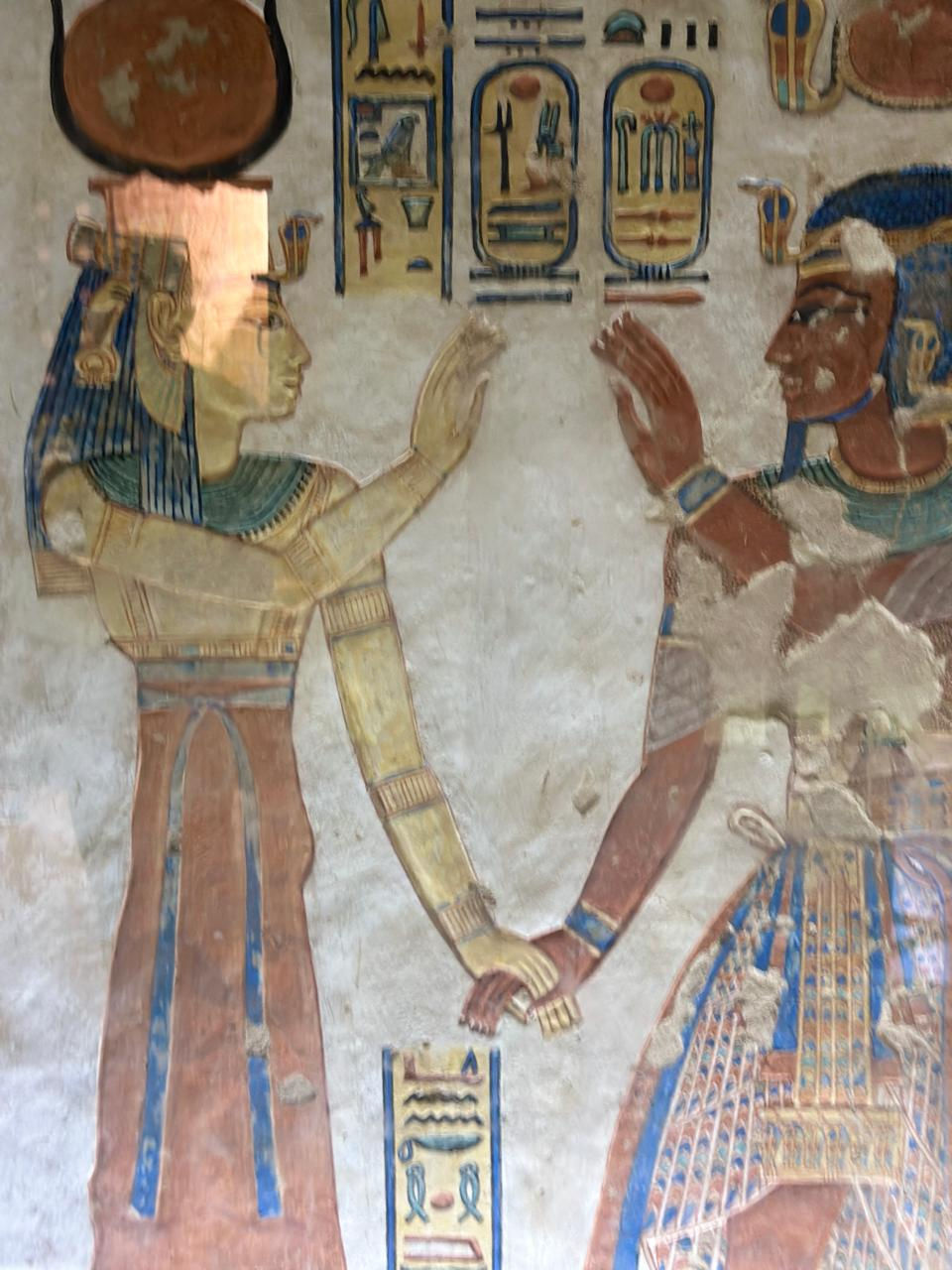
Women in ancient Egypt had more legal freedom than women almost anywhere else in the ancient world. They could own and inherit property, make wills, go to court, choose to divorce and run businesses. Most worked at home and in their communities, some served as priestesses, and a few, like Hatshepsut, ruled Egypt as pharaoh. Still, government and public life were largely run by men.
Equal Before the Law: The Rights of Women in Ancient Egypt
When the Greek traveller Herodotus visited Egypt, he was amazed. To him, Egypt was a land where normal customs were turned upside down, and the freedom of its women was part of the surprise.
In Egyptian law, a woman was a full person, not the property of her father or husband. She could buy, sell and inherit property in her own name. She could lend money, act as a witness, make a will, and stand up in court to defend herself.
My favourite proof comes from Deir el-Medina, the village of the craftsmen who built the royal tombs near Luxor. Around the 12th century BC, a woman named Naunakhte wrote her will and left several of her children out of it. Her reason? They hadn't looked after her in her old age. The local court accepted her decision. Three thousand years later, she still makes my guests smile.
Marriage didn't take these rights away. A wife kept control of the property she brought into the marriage, and she was usually entitled to a share, often one third, of everything the couple built together.
Love, Marriage and Divorce on the Nile
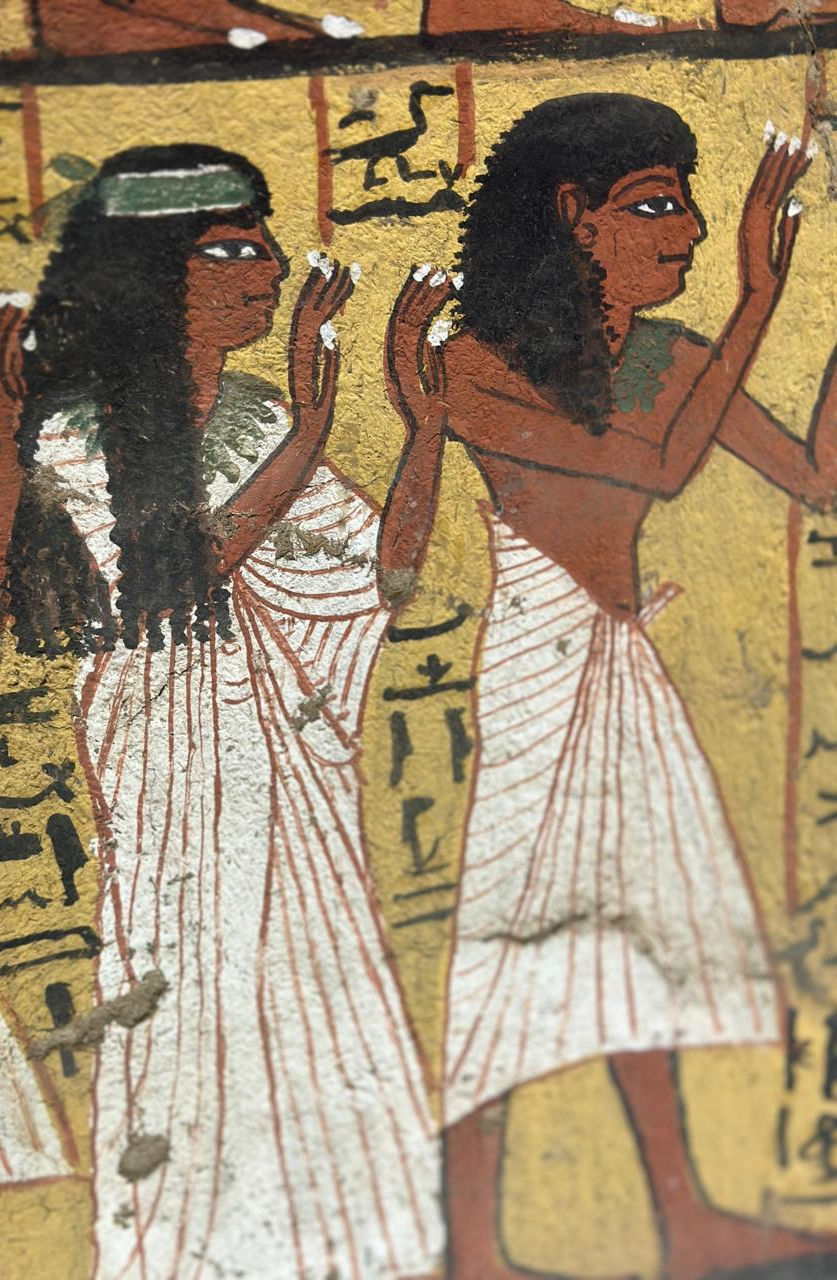
Here's something that surprises almost everyone: marriage in ancient Egypt wasn't a religious ceremony. In practice, a couple was married once they set up home together. In later periods, written marriage contracts set out what each side brought and what the wife would receive if things didn't work out.
And if things didn't work out, either partner could ask for a divorce, with little shame attached. A divorced woman usually took back her own property and was free to marry again.
Still, most Egyptians clearly hoped for a love that lasted. Walk through their tombs with me and you'll see husbands and wives painted side by side, sometimes with an arm gently around each other. It's one of the most touching sights in Egypt.
"Mistress of the House": Where the Real Power Was
The most common title for a married woman was nebet per, which means "mistress of the house". Don't let the word "house" fool you. She ran the household, managed its food stores and its servants, and raised the children. Historians such as Gay Robins and Joyce Tyldesley stress that this was a position of real authority. In many homes, she was the CEO.
Motherhood, Magic and the Hippo Goddess

HiBecoming a mother was the great expectation of most Egyptian women, and also their greatest danger. Many mothers and babies did not survive childbirth, so families called on every protection they could find.
Women gave birth squatting on special birth bricks, surrounded by female relatives and midwives. They prayed to Taweret, a pregnant hippopotamus goddess, and to Bes, a cheerful dwarf god who chased away evil. Spells, amulets and carved ivory wands guarded mother and child.
Motherhood also brought deep respect. Ancient wisdom texts told sons to honour their mothers and repay all the care they had received. Some advice never goes out of date!
Bakers, Weavers, Singers and a Lady Doctor: Women at Work
Most Egyptian women worked, usually in and around the home, and the economy depended on them:
• Food and textiles: women ground grain, baked bread and brewed beer. Weaving fine linen was largely their work, and good cloth was so valuable it could be traded or paid as wages.
• Trade: women sold their extra cloth, bread or vegetables in local markets.
• Music and ritual: women performed as singers, dancers and musicians, and as professional mourners at funerals.
• Care: midwives and wet nurses were respected and paid for their skills.
Only a few women could read and write, and very few held official titles. One wonderful exception is Peseshet, who lived in the Old Kingdom and held the title "overseer of female physicians". Wealthy women also managed estates and business affairs, especially when their husbands were away.
Priestesses, Goddesses and the God's Wife of Amun
Religion opened one of the few doors for women into public life. In the Old Kingdom, many elite women served as priestesses of the goddesses Hathor and Neith. Later, the most common temple role for women was "chantress", a singer who filled the temple with music, often shaking a sistrum, a sacred rattle.
The highest religious role a woman could hold was God's Wife of Amun at Thebes, today's Luxor. Queens such as Ahmose-Nefertari held the title in the New Kingdom. By the 8th to 6th centuries BC, the God's Wife, usually a king's unmarried daughter, controlled great temple wealth and real political power in Upper Egypt.
And of course, women were at the very heart of Egyptian belief: Isis, the devoted wife and mother; Hathor, goddess of love, music and joy; and Ma'at, the goddess of truth and cosmic order.
The Women Who Ruled Egypt
Kingship in Egypt was meant to be male. And yet a handful of extraordinary women took the throne, usually when the royal family was in crisis. Historian Kara Cooney argues that Egyptians accepted a woman's rule as an emergency measure to protect the dynasty.
Woman | When | Her story |
Merneith | c. 2950 BC | May have ruled as regent in the 1st Dynasty |
Sobekneferu | c. 1800 BC | The first woman clearly known as king; ended the 12th Dynasty |
Hatshepsut | c. 1479–1458 BC | Ruled as full pharaoh for about 20 years and built Deir el-Bahari |
Nefertiti | c. 1350 BC | Great royal wife of Akhenaten; may have ruled after him |
Tausret | c. 1190 BC | Last ruler of the 19th Dynasty |
Cleopatra VII | 51–30 BC | The last ruler of Ptolemaic Egypt |
Hatshepsut: the woman who became king
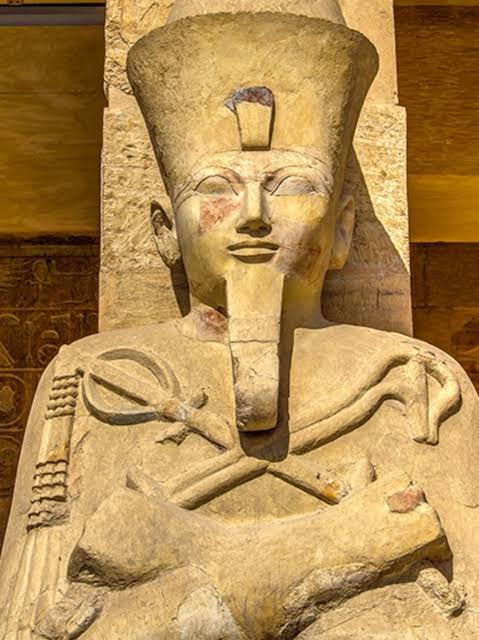
Hatshepsut is the queen my guests ask about most. She ruled for around twenty years, sent a famous trading expedition to the land of Punt, and built one of the most beautiful temples in Egypt at Deir el-Bahari. Because the image of a king was male, she was often shown wearing a king's false beard and royal kilt. After her death, many of her statues and images were damaged, probably to restore a clean line of male kings. Standing in front of her temple, you can still feel her ambition.
Other great royal wives, such as Queen Tiye and Nefertiti, held real influence without ruling alone. They took part in diplomacy and religion, and appear in art almost the same size as their husbands, a sure sign of their importance.
The Other Side of the Story
I always tell my guests the full story, and it would be unfair to paint ancient Egypt as a paradise of equality. Women had rights in law, but not equal power. Government, the army, the scribes and most of the priesthood were run by men, and a woman's status usually depended on her father or husband.
Even the art shows it: women are often painted with pale skin and men with reddish-brown skin, suggesting an ideal of women indoors and men outside. Most of what we know also comes from wealthy families and was written by men. The lives of ordinary village women are much harder to see, which is why places like Deir el-Medina are so precious.
Why Their Story Still Matters
Compared with their neighbours in Greece or Mesopotamia, Egyptian women stood on remarkably firm ground. They owned property, chose to divorce, ran households, served the gods and, a few times, ruled the whole country. Their story reminds us that the ancient world was never just one story, and that rights on paper do not always mean equality in life. That's exactly what makes them so fascinating to meet.
Frequently Asked Questions

Did women have rights in ancient Egypt?
Yes. Women in ancient Egypt could own and inherit property, sign contracts, make wills, go to court and ask for a divorce, rights that were rare elsewhere in the ancient world.
Could a woman be pharaoh in ancient Egypt?
Yes, though it was rare. Sobekneferu, Hatshepsut and Tausret all ruled as king, and Cleopatra VII was the last ruler of Ptolemaic Egypt.
Who was the most powerful woman in ancient Egypt?
Hatshepsut is often considered the most successful, ruling as pharaoh for about twenty years and leaving magnificent monuments such as her temple at Deir el-Bahari in Luxor.
Where can I see sites linked to the women of ancient Egypt?
In Luxor, visit Hatshepsut's temple at Deir el-Bahari, the Valley of the Queens, Karnak Temple and the village of Deir el-Medina. Further afield, the temples of Hathor at Dendera and Isis at Philae are dedicated to Egypt's great goddesses.
Walk in Their Footsteps with Moshy Tours

And who better to share their stories than a woman who knows them by heart? On a private tour with me, we'll visit:
Deir el-Bahari: Hatshepsut's terraced temple, built by the woman who dared to rule as king.
Valley of the Queens: painted tombs of royal wives and princesses, still glowing after 3,000 years.
Karnak Temple: the halls where the God's Wives of Amun once held power.
Deir el-Medina: the village where Naunakhte wrote her famous will.
Dendera and Philae: the temples of Hathor and Isis, the goddesses women turned to in love, birth and loss.
Every tour is 100% private and built around your interests and pace, in English, French or Arabic. Especially welcoming to solo female travellers, couples and families, it feels less like a tour and more like exploring Egypt with a local friend.
Ready to meet the queens of the Nile? Private. Personal. Authentic.
WhatsApp: +20 106 621 6511 ·
Instagram: @moshy_tours_official
Want to read more?
• Gay Robins, Women in Ancient Egypt (1993)
• Joyce Tyldesley, Daughters of Isis: Women of Ancient Egypt (1994)
• Kara Cooney, When Women Ruled the World (2018)
• Carolyn Graves-Brown, Dancing for Hathor: Women in Ancient Egypt (2010)
• Mariam Ayad (ed.), Women in Ancient Egypt: Revisiting Power, Agency, and Autonomy (2022)


Such a fascinating and beautifully written article! It’s inspiring to learn about the strength, independence, and achievements of women in ancient Egypt. Thank you for bringing their stories to life and highlighting such an important part of Egypt’s rich history!
I want everyone to read this and to learn about how Egyptian women used to live
Can't wait to go in a tour with you to dive into my ancestors' secrets ❤️❤️❤️
I really love how you described the life of Egyptian women
So while reading I felt more proud that I am Egyptian woman