Ancient Egyptian Mummification and Anubis: Secrets of the Journey to the Afterlife
- mosheiraaboghalia

- Jul 28
- 2 min read
Imagine this...
A candle flickers inside a silent embalming chamber.
The scent of cedar oil and incense fills the air.
A priest wearing the sacred mask of Anubis kneels beside the body.
The final linen bandage is wrapped.
Then...
Everything stops.
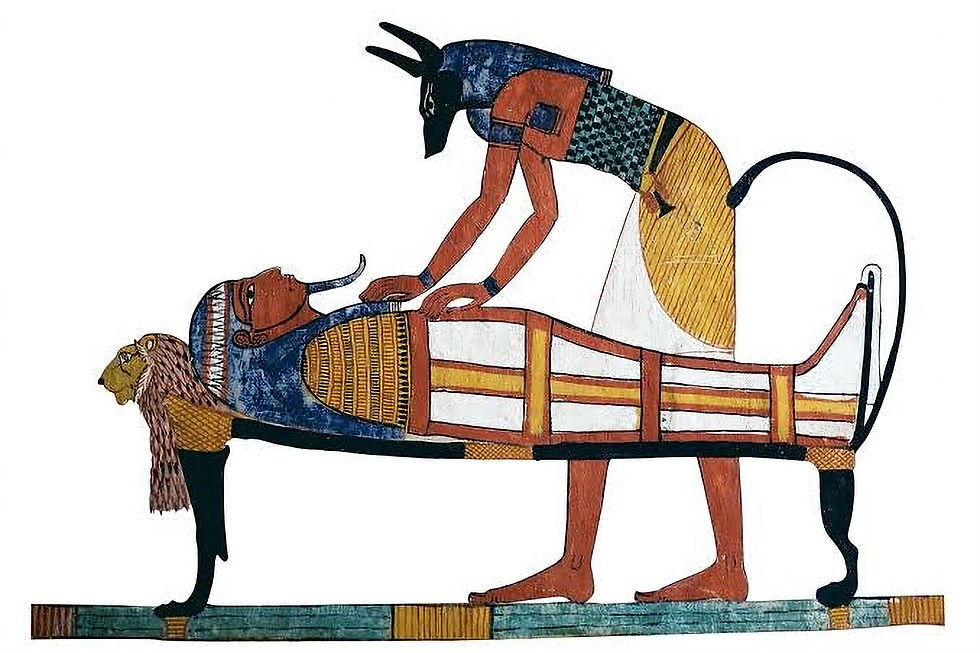
For the ancient Egyptians, this was the most dangerous moment of all.
They believed the deceased stood between two worlds—no longer among the living, yet not fully accepted into the afterlife. Without the correct rituals, sacred words, and divine protection, the soul could wander forever, never reaching eternity.
That is why mummification was never considered a medical procedure.
It was a sacred act of magic.
Every prayer whispered by the priests was believed to guide the soul safely through the invisible world.
Every knot tied into the linen carried protective power.
Every amulet hidden beneath the wrappings had a purpose.
To the ancient Egyptians, a mummy was not simply a preserved body.
It was a traveler being carefully prepared for the greatest journey ever imagined.
"Do Not Let My Heart Speak Against Me"

Perhaps the most haunting belief in Ancient Egypt concerned the heart.
The Egyptians believed your heart was alive with memory.
It remembered every generous act...
Every promise you broke...
Every secret no one else knew.
When the deceased entered the Hall of Judgment, Anubis placed the heart on one side of a golden scale and the Feather of Ma'at on the other.
But there was one terrifying possibility.
What if your own heart betrayed you?
To prevent this, embalmers often placed a heart scarab over the chest, engraved with a magical plea from the Book of the Dead:
"O my heart… do not stand against me as a witness."

Imagine carrying a charm into eternity—not to protect you from monsters, but to persuade your own heart to remain silent.
The Ceremony That Brought the Dead Back to Life
Just before the tomb was sealed, priests performed one final ritual that many visitors find astonishing today.
Known as the Opening of the Mouth Ceremony, it was believed to awaken the mummy's senses.
Using sacred instruments, the priests gently touched the lips, eyes, ears, and nose.
Why?
Because they believed the deceased would once again breathe... speak... eat... see... and hear in the next world.
Without this ceremony, eternal life could never truly begin.
To the ancient Egyptians, death was not an ending.
It was an awakening.
And every mummy was prepared not for burial...
But for rebirth.


Comments